Each Step a Prayer: 2026 Walk for Vocations Unites Diocese
For five days and 75 miles, priests and pilgrims crossed the Diocese of Toledo with a single intention: more priests.
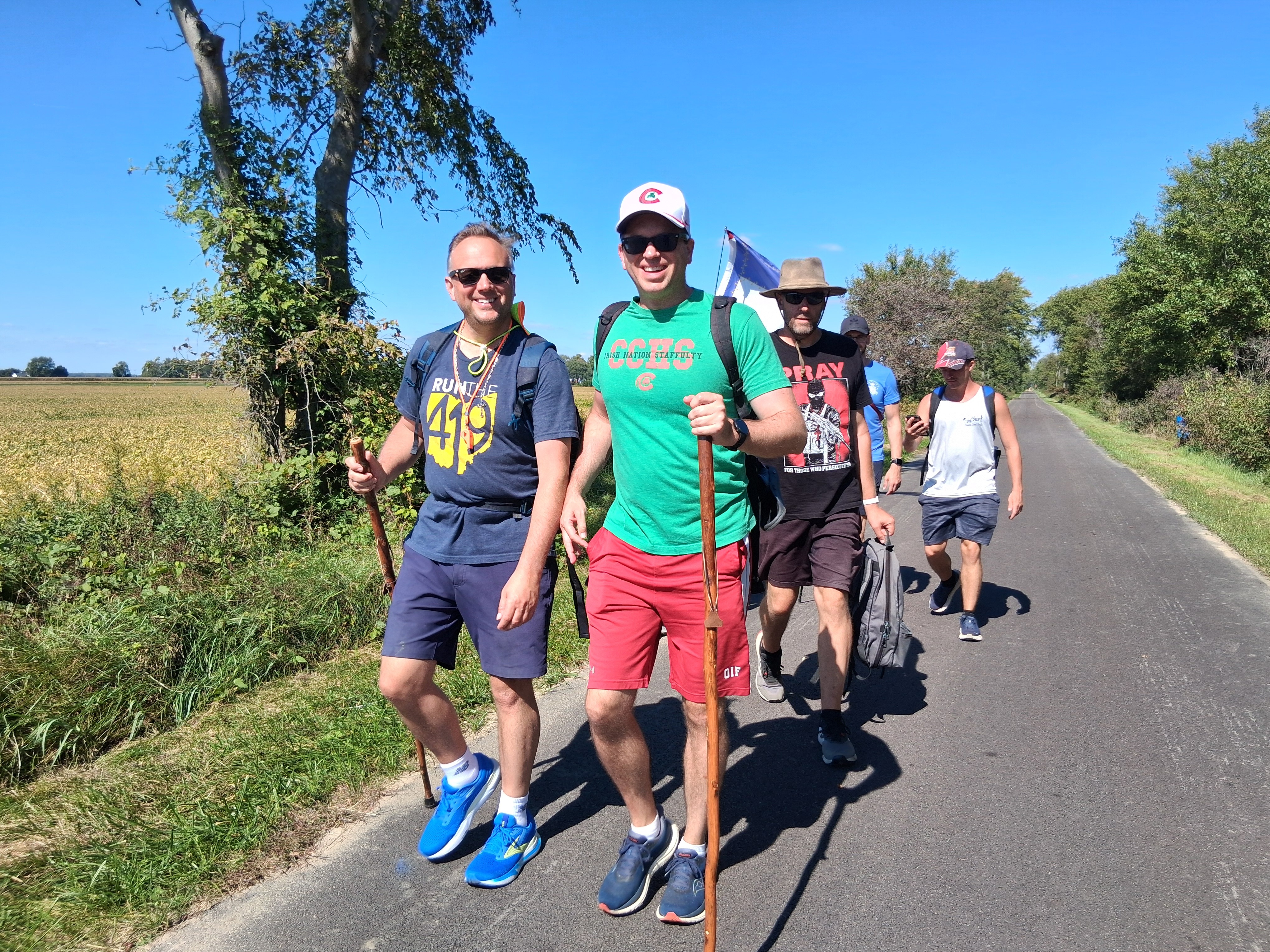
The third annual Walk for Vocations began Sunday, Sept. 27, at Our Lady, Queen of the Most Holy Rosary Cathedral in Toledo and concluded Thursday, Oct. 1, at the Basilica and National Shrine of Our Lady of Consolation in Carey. Along the way, every mile, blister, prayer and sacrifice was offered for an increase in vocations to the diocesan priesthood.
This year brought a new route, new communities and a broader invitation for the faithful throughout the diocese to take part. Catholics were encouraged to walk in person, walk where they were, or simply pray alongside the pilgrims.
By the end of the pilgrimage, the Walk for Vocations had become much more than the group visible along the side of the road.
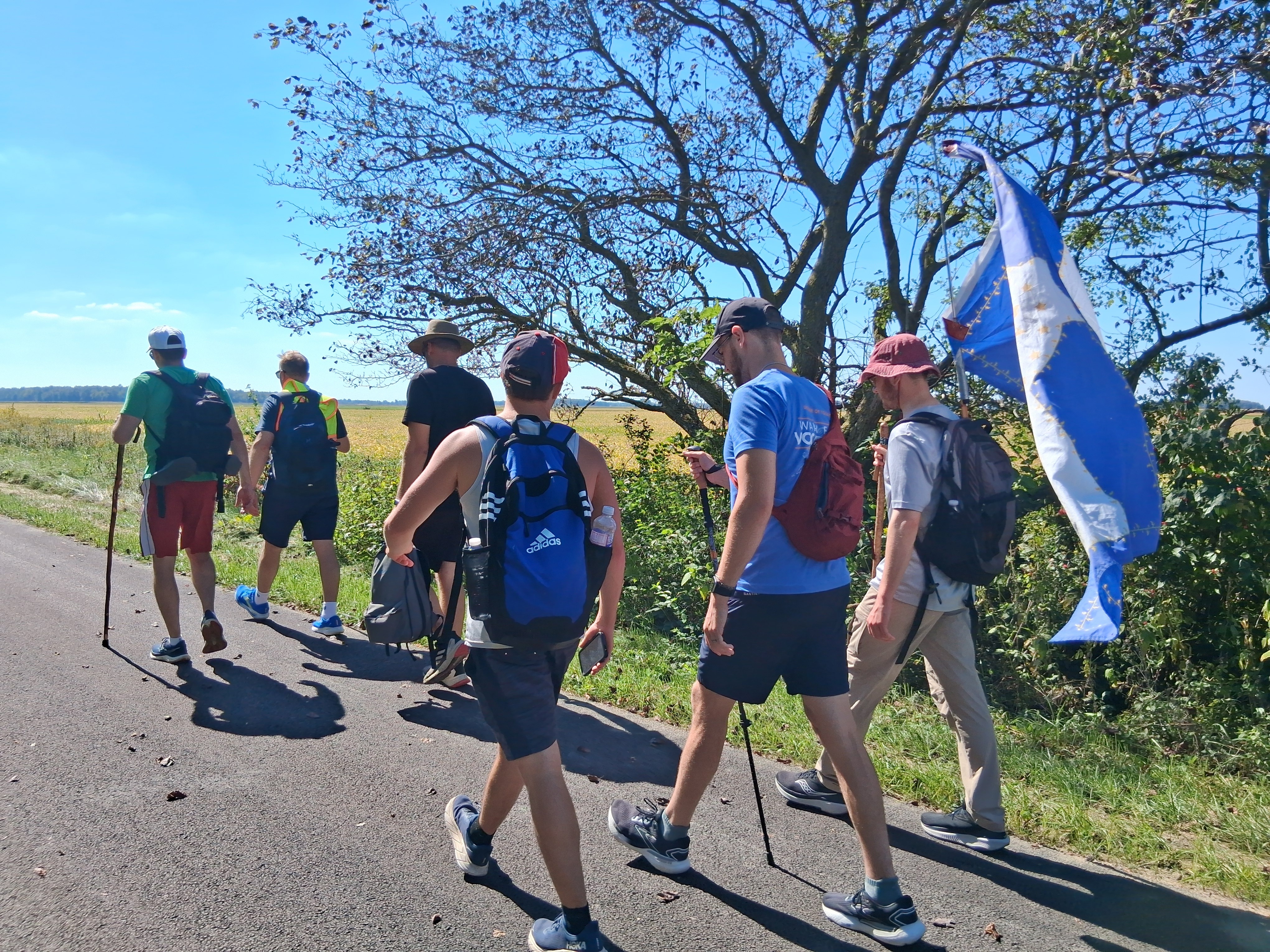
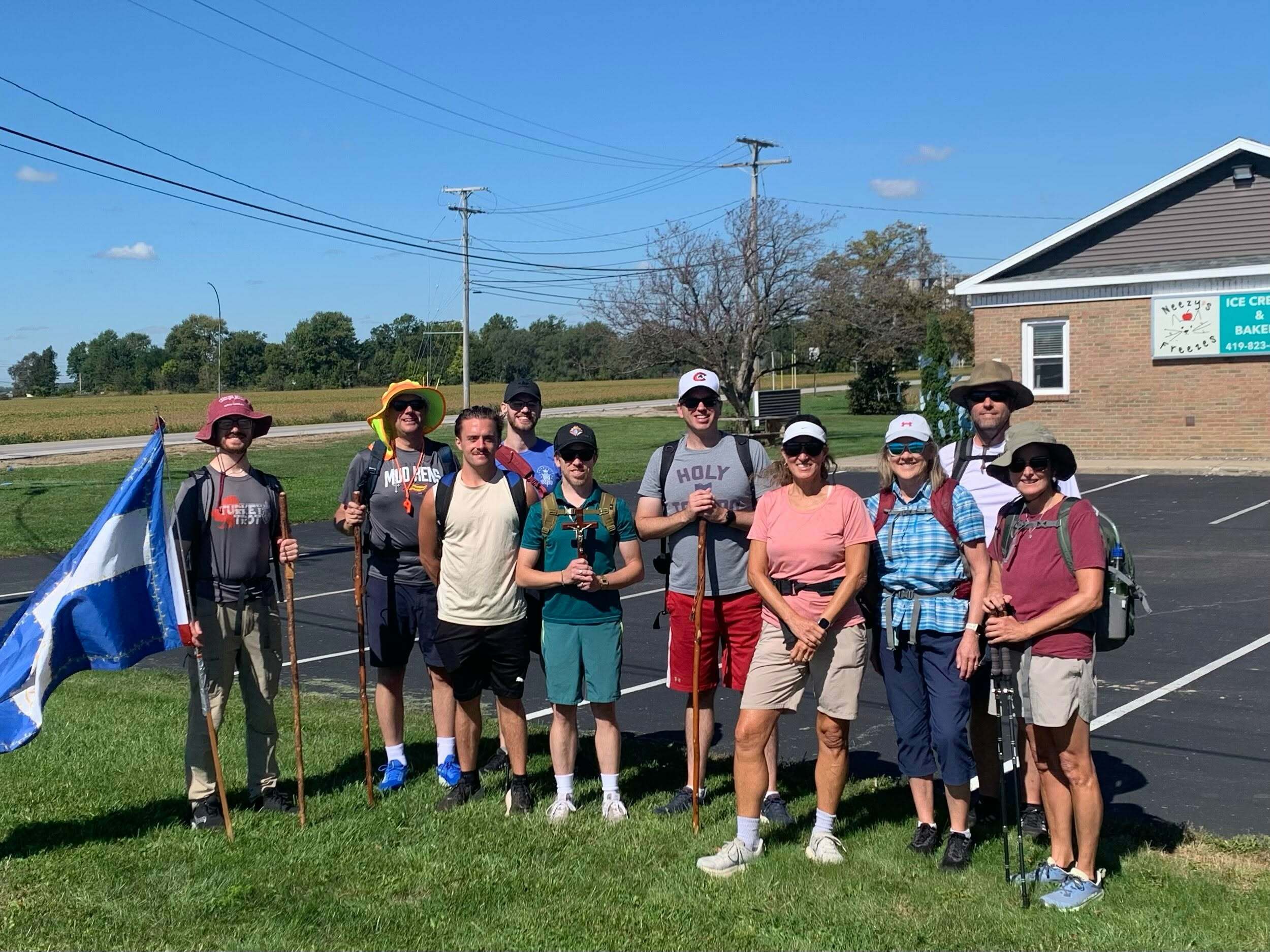
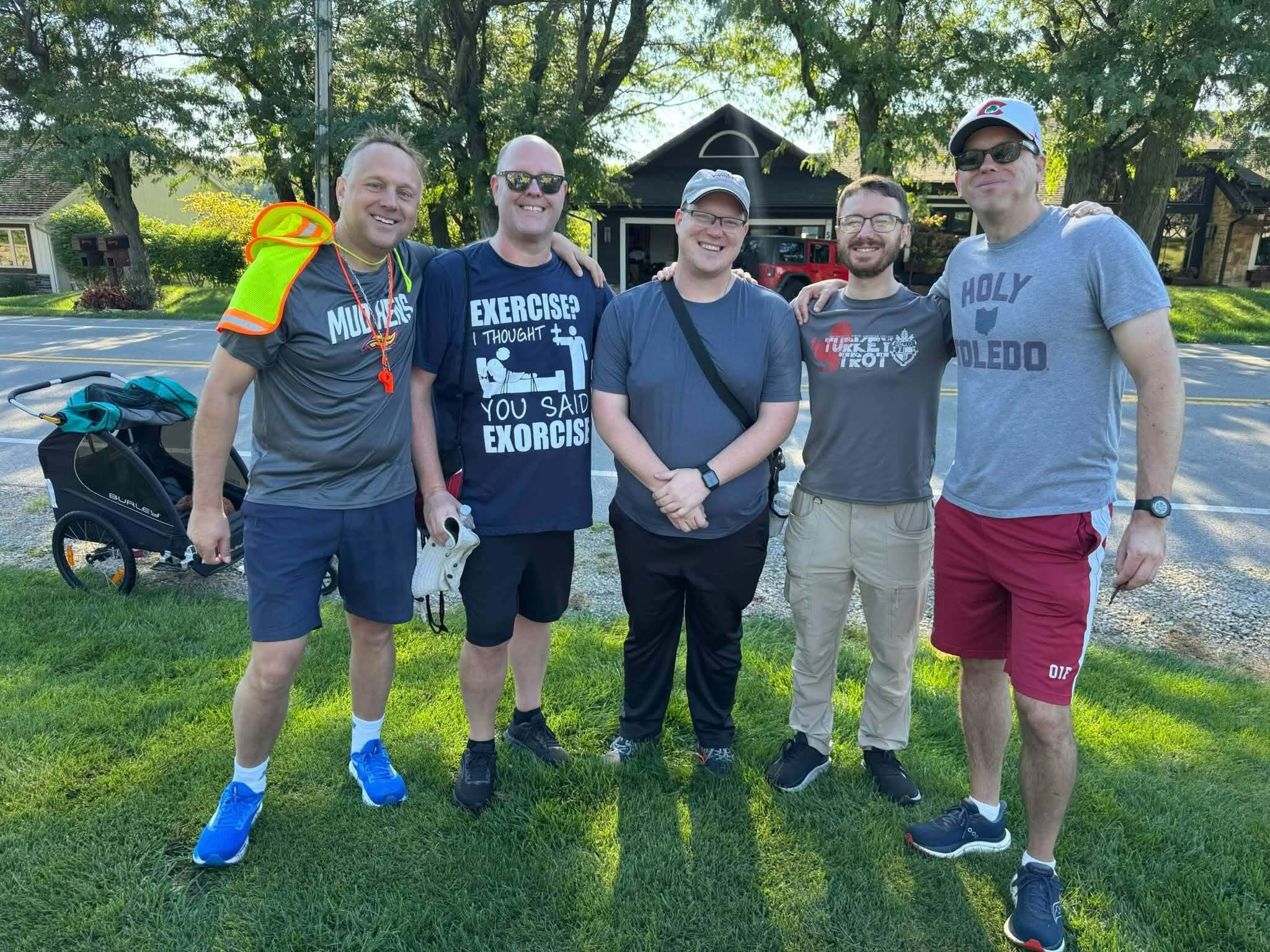
Fr. Joseph Mominee, Fr. David Kidd and Msgr. Tad Oxley — the three priests who first undertook the pilgrimage together in 2024 — completed all 75 miles. They were joined for the entire route by three laymen from different parts of the diocese: Joe from Paulding, Joe from Leipsic and Dylan from Maumee.
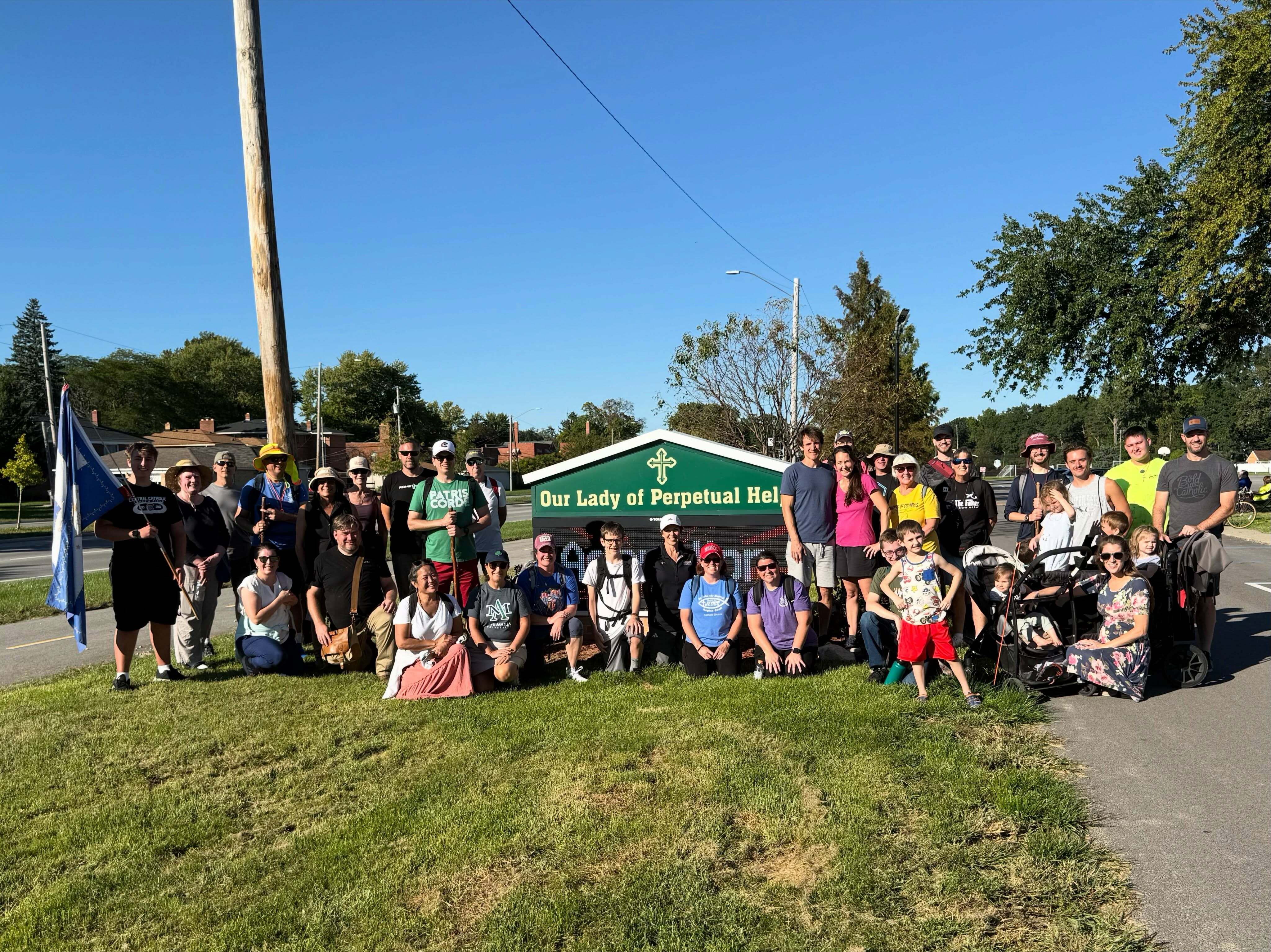
Dozens more joined them for individual days or portions of the pilgrimage. The opening day from Rosary Cathedral drew the largest group, with approximately 40 pilgrims setting out together.
But the heart of the Walk was never simply the number of miles covered.
A pilgrimage ordered toward prayer
Inspired by centuries-old European walking pilgrimages, particularly the Camino de Santiago in Spain, the diocesan pilgrimage was created as a way to bring that tradition closer to home.
The priests have named the pilgrimage El Camino de María Nuestra Consolación — the Way of Mary, Our Consolation.
The original route to Carey was walked during the first two years of the pilgrimage. This year introduced a second route to Our Lady of Consolation, and the priests are already praying about the possibility of additional routes in future years.
Just as numerous routes across Europe eventually converge on the shrine of St. James in Santiago de Compostela, Spain, the hope is that multiple diocesan routes might someday lead pilgrims toward Our Lady of Consolation.
Yet the walking itself is only the framework.
Each day is deliberately ordered around prayer.
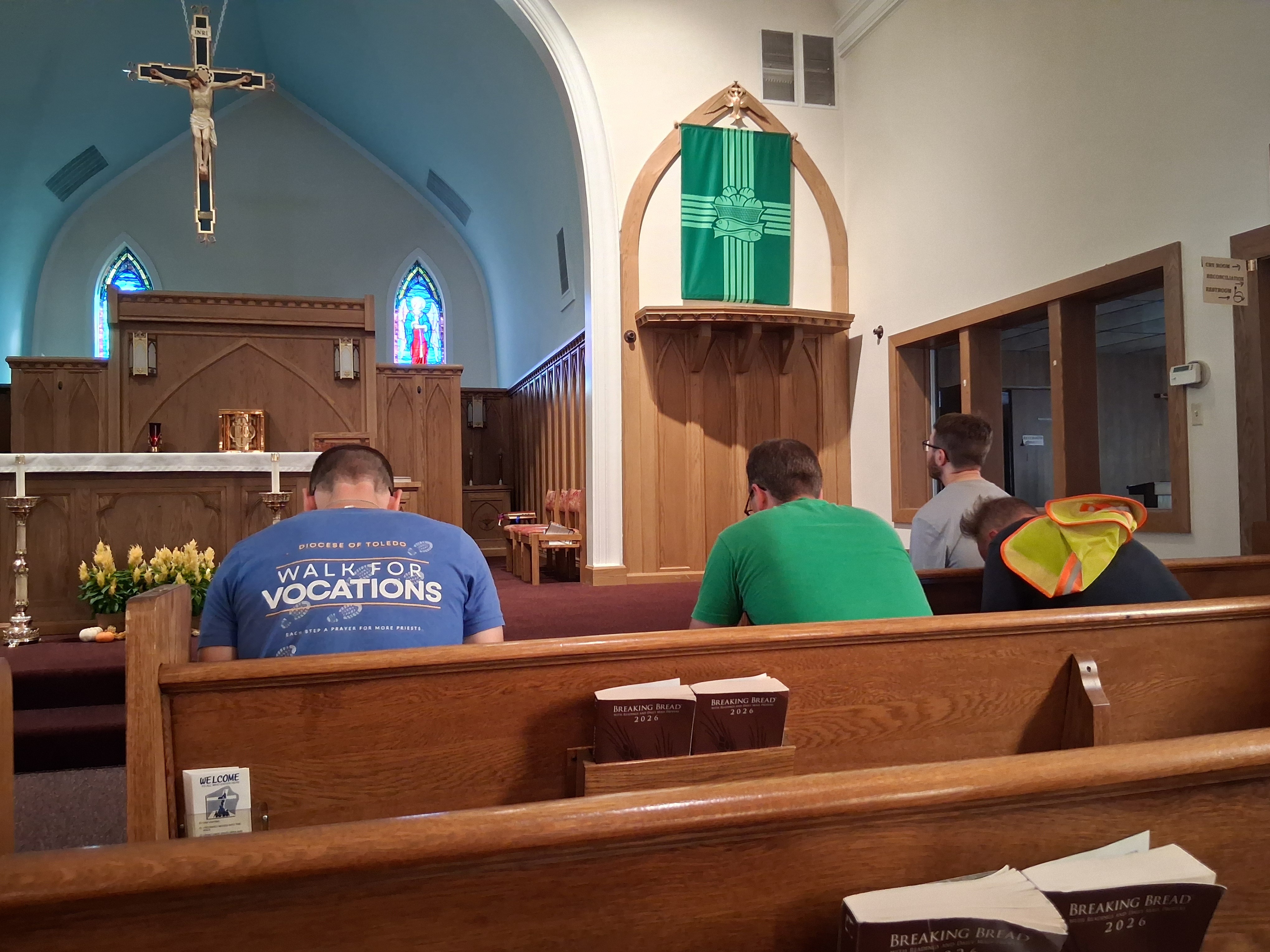
Pilgrims begin with the Rosary, followed by a period of silence — approximately an hour set aside for meditative and contemplative prayer while walking. The Divine Mercy Chaplet is prayed at 3 p.m., spiritual reading is incorporated throughout the journey, and upon reaching the parish at the end of the day, the pilgrims pray the Liturgy of the Hours.
Everything culminates in the Holy Sacrifice of the Mass.
“No matter how many miles we walk — or if we walk a step — it doesn’t really matter,” Msgr. Oxley preached during the pilgrimage. “The Mass is everything. The Mass is our summit.”
That rhythm gives the pilgrimage its purpose. The miles are not simply a feat of endurance but an opportunity to slow down, pray and offer physical discomfort as penance.
Walking through farmland, small towns and country roads, pilgrims encounter what Msgr. Oxley described as opportunities for contemplation: roadside flowers, fields of corn and soybeans, changing weather, even the hope for a little shade or wind.
The experience stands in sharp contrast to a culture that constantly prizes speed and productivity.
“A pilgrimage is not about functionalism. It’s not about productivity. It’s not about data,” Msgr. Oxley reflected. Instead, the walking provides the space to become attentive to God.
That contemplative dimension has become an important part of the pilgrimage for the priests themselves. It also provides an opportunity for priestly fraternity — several days spent praying, walking, talking and offering sacrifice together for the future of the priesthood.
And there is plenty of sacrifice.
Blisters, sore muscles and fatigue are expected.
As Msgr. Oxley has put it simply: the pilgrims may get blisters on their feet, “but we’re okay with that, because we become holier.”
Walking with Mary
Mary also remains at the center of the pilgrimage.
“Mary is the centerpiece because Mary teaches us to receive God,” Msgr. Oxley preached. “Every priest needs Mary, and every person needs Mary.”
Each morning therefore begins with the Rosary, entrusting the journey and its intention to the Blessed Mother.
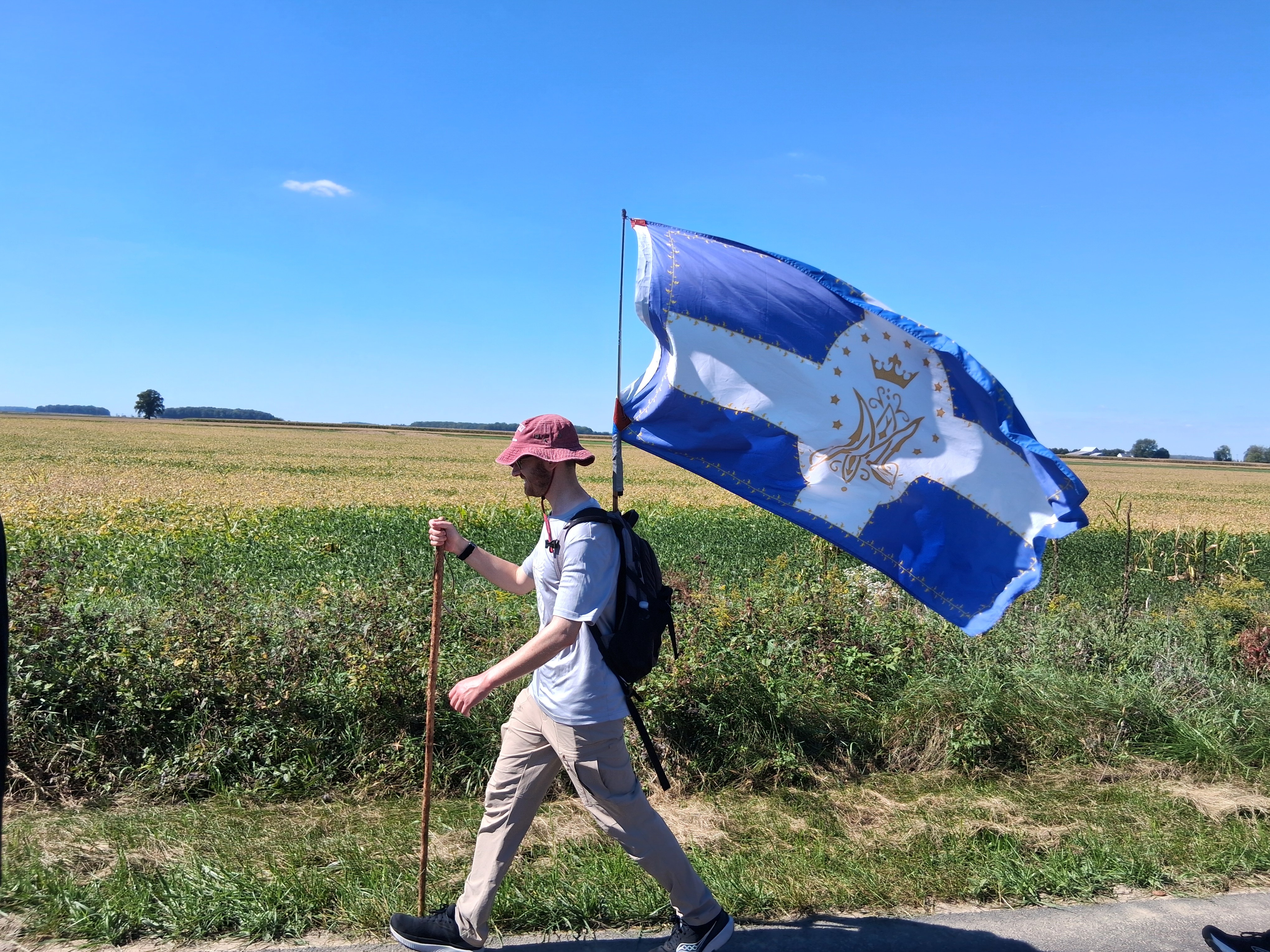
That devotion is visible throughout the pilgrimage. Fr. Mominee walks with a Marian flag attached to his backpack, billowing behind him mile after mile — an additional physical burden, but also a visible reminder that the pilgrims are walking under the patronage of Our Lady of the Rosary, patroness of the Diocese of Toledo.
Their destination, fittingly, is another Marian shrine: Our Lady of Consolation.
A pilgrimage beyond the road
One of the major developments of the 2026 Walk was the effort to make participation possible throughout the entire diocese.
Bishop Daniel E. Thomas granted a partial indulgence, under the usual conditions, connected with participation in the Walk for Vocations. The faithful were invited not only to join the physical pilgrimage, but also to walk in their own communities or unite themselves to the pilgrimage through prayer.
Parishes and schools embraced that invitation.
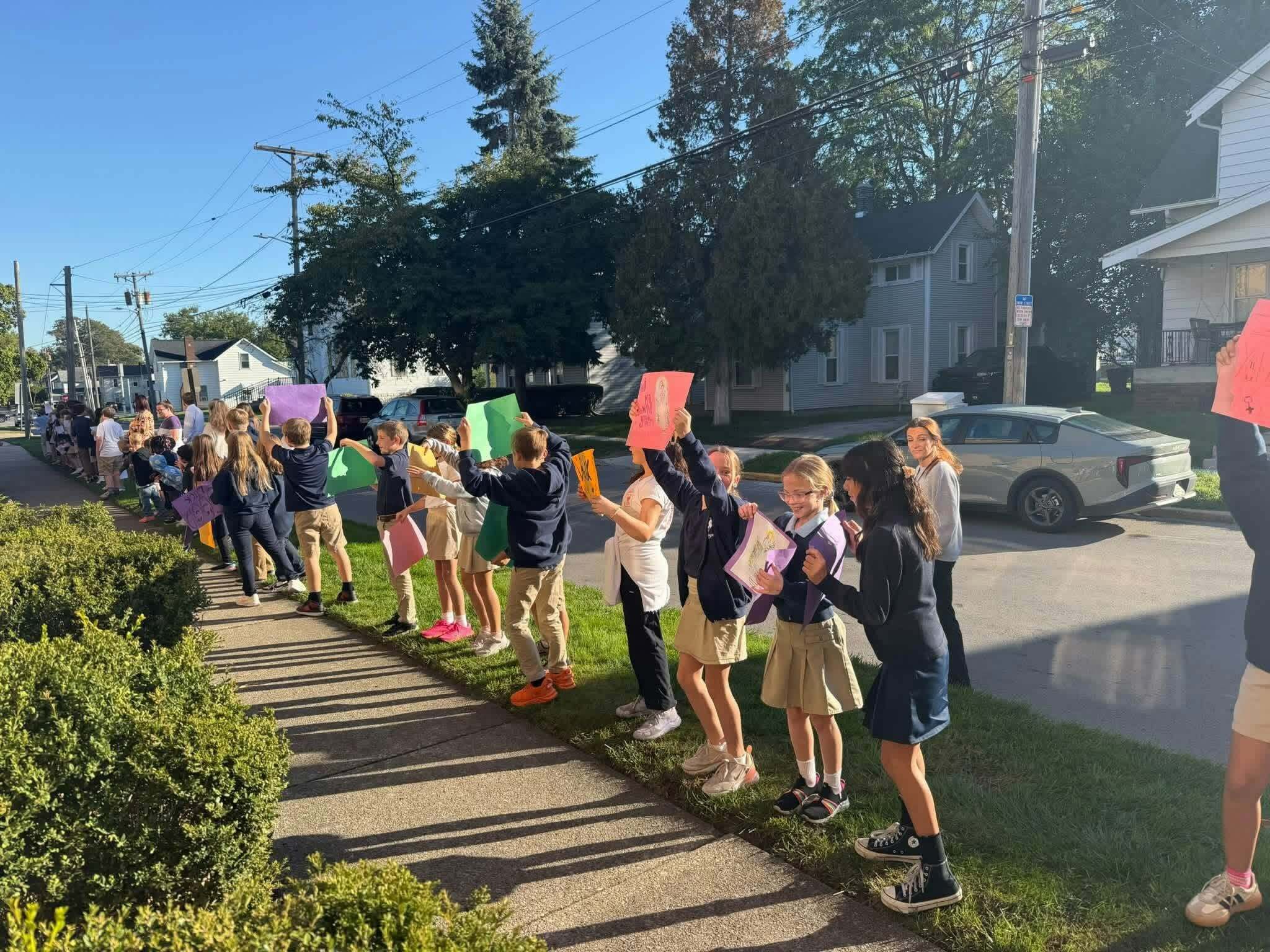
At Immaculate Conception School in Bellevue, for example, 168 students and 17 adults held their own day of retreat and reflection in solidarity with the pilgrims.
The day began with Mass before students traveled to the Sorrowful Mother Shrine. There, they rotated through stations centered on vocations, including a discussion about discernment to the priesthood and consecrated life, a sacred-art activity and a station where students created cards and artwork to encourage a diocesan seminarian.
The school community concluded its day with a Rosary Walk for Priestly Vocations.
Together, they contributed more than 277,000 steps to the Walk for Vocations — without ever joining the primary route.
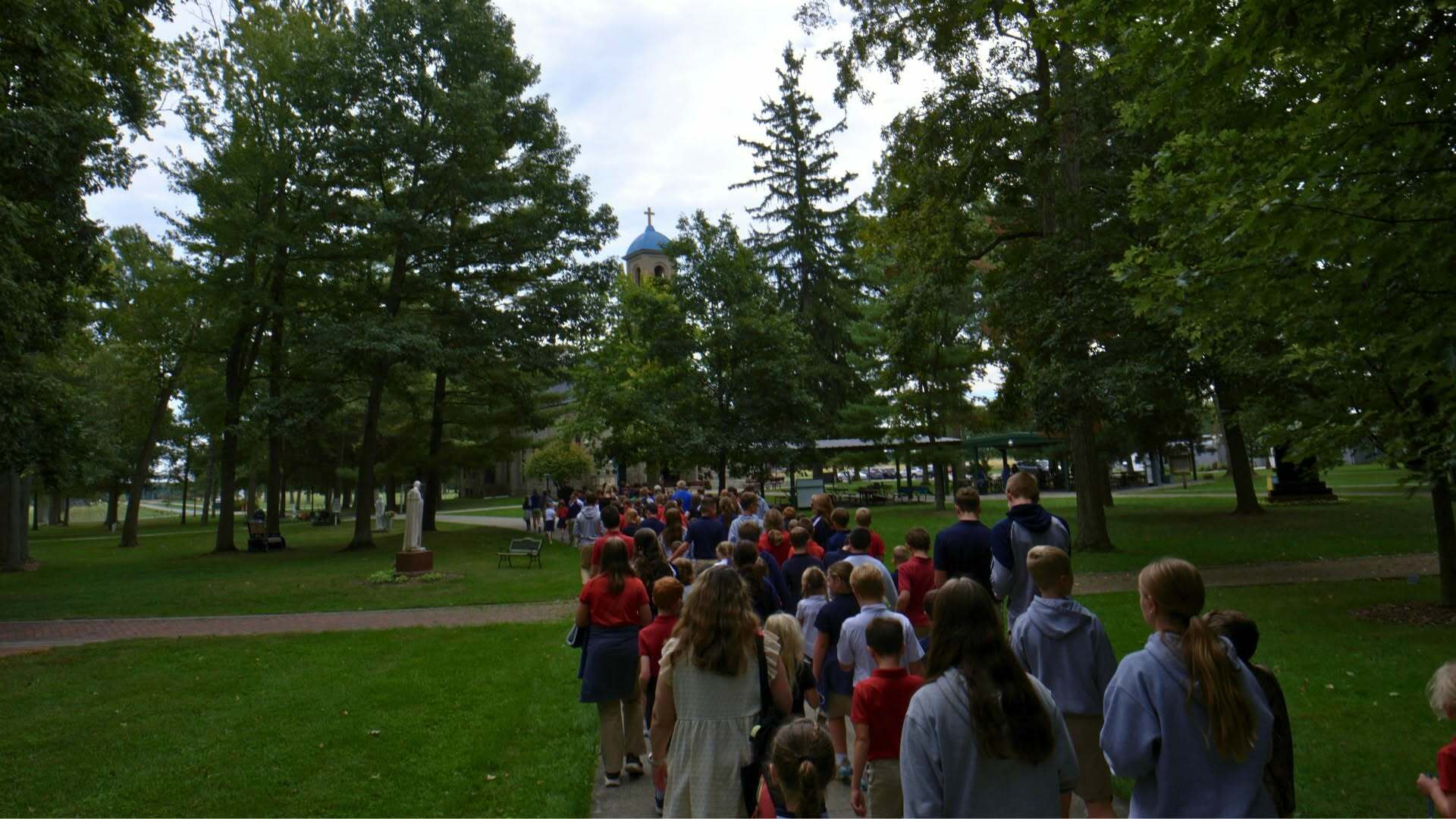
Similar prayer and support could be seen throughout the diocese, while the parishes and schools physically located along the pilgrimage route provided another form of participation. They welcomed pilgrims with meals, water, places to rest, prayer and encouragement.
That hospitality transformed a long walk across northwest Ohio into something distinctly diocesan.
Each community became part of the pilgrimage.
Each prayer became part of its intention.
Each step became a prayer for more priests.
The pilgrimage continues
The Walk for Vocations has already grown considerably from the first pilgrimage undertaken by three priests in 2024.
What began as an effort to bring the ancient Catholic tradition of pilgrimage into the Diocese of Toledo has developed into a growing movement of prayer and penance for vocations — one that now stretches well beyond the pilgrims who walk every mile.
And it will continue.
The 2027 Walk for Vocations is already being planned for early June, a move that will allow diocesan seminarians to participate before returning to seminary.
There may be new pilgrims, new roads and, eventually, even new routes to Carey.
The intention will remain the same.
For five days this year, that intention was carried along 75 miles of northwest Ohio roads — in Rosaries prayed aloud, in silent Holy Hours, in aching feet, in parish hospitality, in schoolchildren walking hundreds of thousands of steps miles away from the official route, and ultimately in the celebration of the Mass.
Each step a prayer for more priests.
Posted October 2, 2026 at 9:40 am